




Heat Stroke: How to Recognize It, Why It’s Dangerous, and How to Save a Life
On hot summer days or during intense exercise, even a healthy dog can suffer heat stroke. It’s one of the most dangerous emergency conditions in veterinary medicine. Untreated heat stroke can lead to multiple organ failure and death within hours. However, early recognition of signs and proper first aid can save a life.

What is Heat Stroke?
Heat stroke (also known as heat-related illness) is a life-threatening condition in which the body is no longer able to dissipate the heat it generates, causing the body temperature to rise to a critical level (>41 °C) and resulting in damage to tissues and organs. (PMC)
Thermoregulation
Unlike humans, dogs barely sweat. The primary thermoregulation occurs through the respiratory tract—panting evaporates water and thus reduces body temperature.
Some heat is also transferred through direct convection and radiation via the skin, which is why dogs seek out cooler spots in hot weather and lie on them to release excess heat into the environment.
Dogs only sweat through sweat glands in their paws, but since their total surface area is very small, this mechanism plays an insignificant role in thermoregulation.
When the environment is very hot or the dog produces more heat than it can eliminate, the thermoregulatory system fails and heat stroke occurs. (Cornell Veterinary Medicine)
What Can Cause Heat Stroke?
1. Hot Environment. Most common situations:
- being in a car (even at 18-22°C, leaving a car in the sun can cause the interior temperature to rise above 30°C);
- being in the sun without shade;
- poorly ventilated spaces;
- high humidity, which prevents water evaporation from the respiratory tract.
2. Physical Exertion. A dog can overheat even when the air temperature is not particularly high if running intensely, playing, exercising, working in search and rescue, or hunting. Exertional heat stroke can develop even at 20–22°C. (PMC)
3. Some dogs have a higher risk of heat stroke: brachycephalic breeds (pugs, French bulldogs, English bulldogs); obese dogs; older dogs; small puppies; dogs with heart or respiratory diseases; long-haired, thick-coated, and dark-coated dogs. (Cornell Veterinary Medicine)

First Signs of Impending Overheating
- intense panting;
- restlessness, agitation;
- excessive drooling;
- reddened or cyanotic mucous membranes and tongue;
- increased heart rate;
- weakness, reduced speed, poor responsiveness.
How to distinguish intense panting from pathological panting? During pathological panting, the dog breathes very rapidly and shallowly, has its mouth wide open, holds its head high, and the tongue is long with the tip curled upward (“tongue like a spoon”). During intense panting, if you address the dog with some compelling words, it will momentarily close its mouth when paying attention (e.g., “Where’s the ball?”, “Want to eat?” or similar). During pathological panting, the dog will not close its mouth even for a moment. If you notice pathological panting, cooling measures must be taken immediately.
At this stage, heat stroke can still be prevented. (rvc.ac.uk)

Dangerous Heat Stroke Symptoms
If the temperature continues to rise, a critical condition develops that requires urgent veterinary care. (iowaveterinaryspecialties.com)
Very severe, pathological panting.
Coordination problems, staggering, collapsing.
Disorientation, confusion.
Vomiting, diarrhea (sometimes with blood).
Pale or bluish mucous membranes.
Seizures, fainting, loss of consciousness.
Why is Heat Stroke So Dangerous?
High temperature damages cells directly, but the most dangerous aspect is the development of a generalized systemic response.
Circulatory Failure
To release as much heat as possible, skin blood vessels dilate, and most of the blood is directed to the skin for cooling, which reduces blood supply to internal organs. Shock develops. (Improve Veterinary Education UK)
Intestinal Wall Damage
This disrupts blood supply to internal organs, and therefore oxygen supply—the intestines are damaged, bacteria and their toxins enter the bloodstream, and generalized infection develops. (iowaveterinaryspecialties.com)
Coagulation Disorders
Disseminated intravascular coagulation (DIC) can develop, where clots form simultaneously in multiple locations throughout the body, all available clotting factors in the blood are consumed, and due to their deficiency, bleeding begins (bloody diarrhea). (PMC)
Brain Damage
Due to direct heat exposure and disrupted circulation, the following occur: disorientation, coordination problems, seizures, coma.
After heat stroke, changes in the brain can be irreversible, leaving long-term neurological disorders. (Merck Manuals)
Kidney, Liver, and Lung Damage
Heat stroke can cause: acute kidney failure; liver damage; pulmonary edema; multiple organ failure. (dvm360.com)
Modern recommendations emphasize the principle:
First aid: “Cool first, then transport”
Cooling must begin immediately, without waiting to reach the veterinarian. (PMC)
1. Stop physical exertion, move the dog to shade or a cool, well-ventilated space; use a fan or otherwise increase air circulation.
2. Use water. Scientific studies show that the most effective methods are: pouring cool water over the dog; immersion in water; spraying water combined with a fan. These methods are more effective than passive cooling. (PMC)
3. Allow drinking if the dog is conscious and can swallow: offer a small amount of cool water, but do not force it. (MSD Veterinary Manual)
Can you immerse in water? YES
It was previously believed that cold water constricts blood vessels in the skin and prevents cooling. However, more recent studies show that water baths or immersion are among the most effective cooling methods, and the recommendation to “avoid water” is no longer considered valid. During shock, blood vessels in the skin no longer respond to cold water by constricting. (PMC).
When placing a dog in water, you must ensure that the head does not go underwater and that the dog does not inhale water.
Using a fan on wet fur greatly accelerates heat release. (Today’s Veterinary Practice)
What Should You Not Do?
Even if the dog appears normal after cooling, veterinary examination is essential. Complications can appear hours later (dvm360.com), and organ damage can progress for several days. (Israeli Research Community Portal)
❌ Do not wrap the dog in wet towels.
 Do not delay cooling until you reach the clinic. Start cooling immediately.
❌ Do not pour alcohol on the paws.
❌ Do not force liquids, especially if consciousness is impaired.
❌ Do not leave the dog alone.
❌ Do not stop the trip to the veterinarian even if the dog seems improved.

How to Prevent Heat Stroke?
✅ Avoid intense exertion during hot weather. Train early in the morning or in the evening.
✅ Create a heat adaptation plan (acclimate gradually).
 Always have water available not only for drinking but also for cooling.
✅ Never leave a dog in a car. Provide opportunities to rest in the shade.
✅ Monitor brachycephalic breeds especially closely.
✅ After physical exertion, allow the dog to cool down gradually; do not leave it alone until it stops panting intensely.
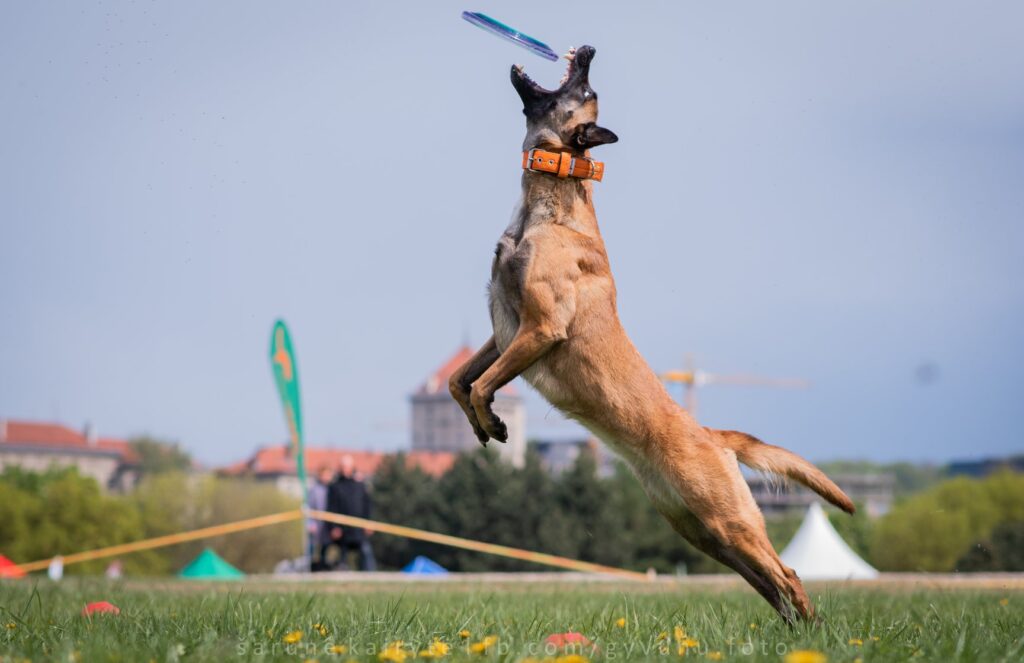
When Can You Return to Sports or Active Training After Overheating?
Even if the dog feels well and appears fully recovered after overheating or heat stroke, the body may need days or even weeks to fully recover. Heat stroke damages not only thermoregulation but can also affect the kidneys, liver, heart, blood clotting system, and nervous system. Some damage only becomes apparent hours or days later, so there’s no need to rush back to active pursuits.
Mild Overheating and Heat Stroke Are Not the Same
If the dog only started panting more heavily, became lethargic, but was quickly cooled and showed no neurological symptoms, vomiting, or loss of consciousness, a few days of rest and reduced activity are usually sufficient.
However, if heat stroke was diagnosed and veterinary care was required, the recovery period should be considerably longer.
First Days After Heat Stroke
For the first 48–72 hours, it’s recommended to have only short walks for natural needs; avoid running, playing, and training; monitor appetite, thirst, urination, and general condition; keep the dog in a cool, well-ventilated environment.
When Can You Start Increasing Activity?
If the dog has fully recovered, blood tests are normal, and the veterinarian has not identified complications, activity should be increased gradually over 3-6 weeks.
If the dog tolerates increasing activity well, you can gradually return to normal life.
In human sports medicine and military medicine, after exertional heat stroke, at least 7 days of complete rest and gradual return to activity over 2–4 weeks is recommended. There are no standardized protocols in veterinary medicine, but these principles are considered appropriate for dogs as well, especially those involved in sports or other intensive work (herding, hunting, search and rescue).
Important: after heat stroke, the most important goal is not to return to sports as quickly as possible, but to ensure complete recovery. Even one training session done too early can increase the risk of recurrent overheating and cause more severe consequences than the first episode.
Does a Dog Become More Susceptible to Overheating in the Future?
Yes. Studies in humans and animals show that after heat stroke, thermoregulatory mechanisms can be disrupted for several weeks or even months. Some dogs become more sensitive to heat after experiencing heat stroke and may overheat more quickly in the future.
Scientific Sources
- Bruchim Y. et al. Pathophysiology of Heatstroke in Dogs – Revisited. Temperature. 2017. (PMC)
- Romanucci M. et al. Pathophysiology and Pathological Findings of Heatstroke in Dogs. Veterinary Medicine: Research and Reports. 2013. (PMC)
- Caldas GG. et al. Heat Stroke in Dogs: Literature Review. Veterinární Medicína. 2022. (PMC)
- Hall EJ. et al. Cooling Methods Used to Manage Heat-Related Illness in Dogs. Veterinary Sciences. 2023. (PMC)
- Bruchim Y. Management of Heat Stroke in the Dog. WSAVA Proceedings. (Vin)
- Merck Veterinary Manual. Heat Stroke Emergency Guidelines. (Merck Veterinary Manual)
- Casa D.J. et al. National Athletic Trainers’ Association Position Statement: Exertional Heat Illnesses. Journal of Athletic Training (2015);50(9):986–1000.
- Roberts W.O. et al. ACSM Expert Consensus Statement on Exertional Heat Illness. Current Sports Medicine Reports (2021);20(9):470–484.
Want a strong, fit dog the safe way?
Browse our dog fitness courses