


It’s very important to understand the ways we can influence a dog’s movement and posture when performing exercises.
Fitness Equipment
Platforms, targets, steps – all of these help us explain to the dog where to stand, lie down, sit, how to hold and align their paws, and which direction to move. What platforms you need for beginner sessions and how to prepare the right equipment can be found in the article Fitness Equipment
Handler Posture and Movement
Dogs respond most to our body language – where and how we stand, where we hold our hand with the treat, and even how we deliver the treat. When performing fitness exercises, the primary goal is movement and posture, and executing verbal commands is just a “side effect.” That’s exactly why we do everything so that the correct movement is performed and the correct position is maintained, while verbal commands remain in the background.
So there are several rules in handler work.
Always stand directly in front of the dog. We invite them to step onto platforms also by standing directly in front of the dog, rather than walking together with the dog and then trying to walk around and stand in front of the dog once they’ve stepped onto the platforms.
The desire to stand to the side is instinctive, because then you can see the whole dog well. The best helper here would be a mirror positioned to the side, where you’ll see the whole dog without twisting or stepping to the side. Another option is to film the dog from the side with your phone and project the image onto a TV to monitor the dog’s position there.
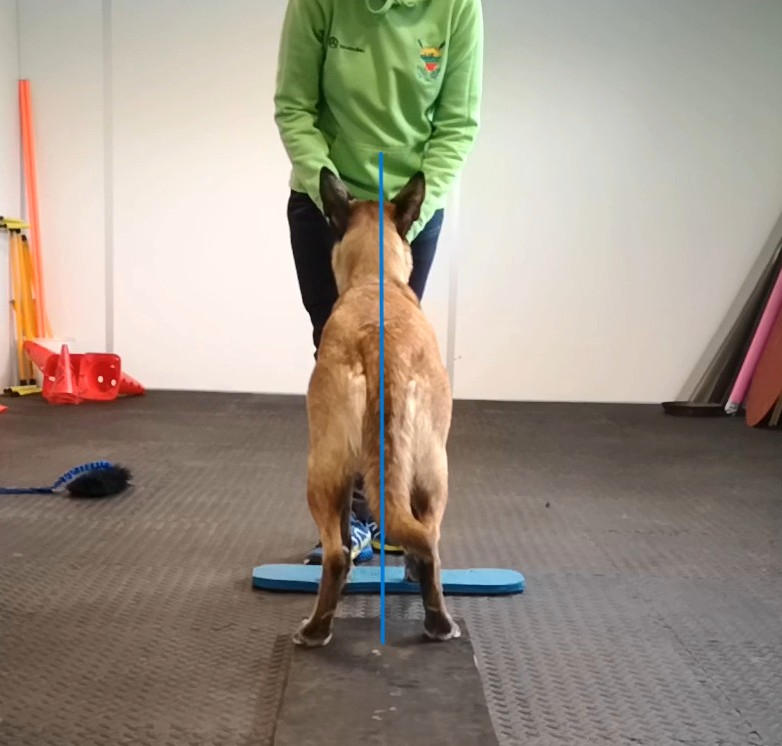
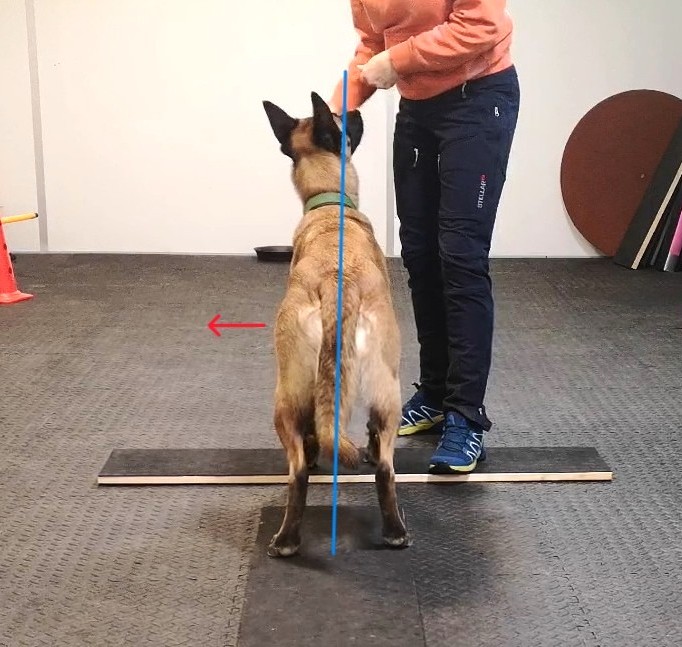
Although it seems to us that the dog is looking at the hand held directly in front of their nose, they still shift more weight to the opposite side. The problem is that we usually work with the same hand and automatically stand on the same side of the dog, as a result of which the dog learns to keep more weight on one side or the other, rather than evenly on both. This way we encourage asymmetric posture and muscle work in the dog, and then training will bring more harm than benefit.
Handler standing on the dog’s right side, weight shifted to the left side, even though holding the treat in the right hand directly in front of the dog’s nose.
Handler standing straight, weight distributed evenly.
Distance between dog and handler. This rule is especially important at the beginning of learning – carefully observe and control what distance from the dog you’re standing at. It shouldn’t be too close or too far, because this also affects the dog’s posture. If you want the dog to step onto 2 platforms and stop, but meanwhile you step too far back from the platforms, of course the dog will follow you and won’t stop, but will step over the platforms and come to you. And vice versa, if you stop too close – they won’t step onto the platform that the handler is standing pressed against.
Hand position. We hold the hand with the treat at our center line – not on the left, as left-handed people do, not on the right, as right-handed people do, not behind our back when we want the dog not to reach for the treat without permission… Always in front at our center line. Because the dog will always follow the hand with the treat, turn to one side or the other, and this way we’ll develop incorrect posture.
If the dog can reach the hand with the treat, they’ll usually try to get it – stick their nose into your palm, lick, nibble… Therefore, we need to teach the dog to wait for permission to take the treat.
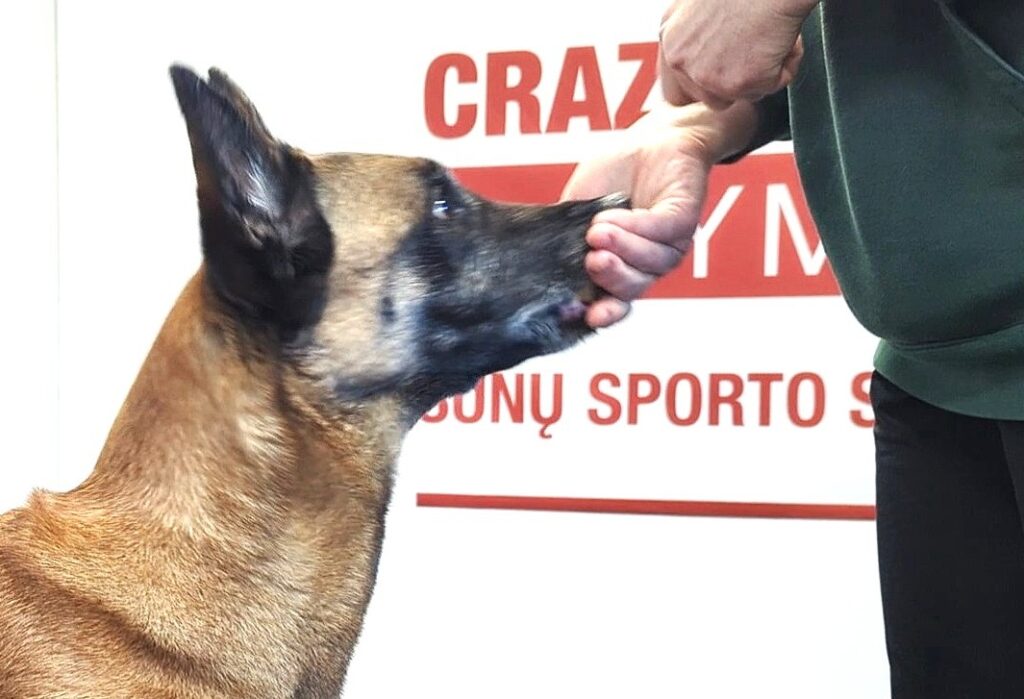
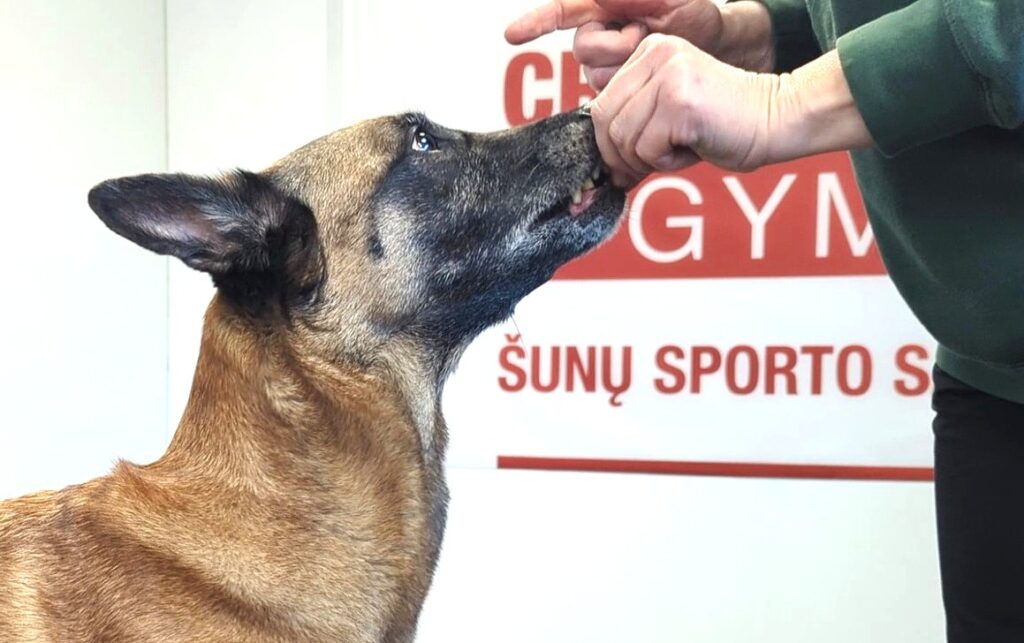
The fourth rule is about how you deliver the treat. When permission to take the treat is given, you need to deliver it so that the dog doesn’t need to make additional effort to get the treat, so they can take it easily. A dog trying to snatch or lick out the treat engages a whole series of other muscles unnecessary for that exercise, performs additional movements, loses balance and position. We need to deliver the treat so that the dog maintains the correct head position – in most cases this is a horizontal nose line aligned in the median plane.
One way to deliver treats is to place the treat in an open palm. While there’s no permission to take it, you cover the treat with your thumb, and as soon as you give permission to take it – you pull your thumb away from the treat and the dog easily takes it, as if from a little plate. In one hand we hold several treats, and portion them out one at a time into the other palm-plate.
Another good method is to take the treat with two fingers and simply place it in the dog’s mouth (take the treat from one hand and with two fingers of the other hand place it in the dog’s mouth). We always keep both hands next to each other.
Treat delivered from palm as if from a plate
Treat placed directly into mouth
Another tip – before starting an exercise, count how many treats you’ll need in this series and take that many into your handful.
For example, we’re doing the “Sit – Stand” exercise. We know we need to do 5 repetitions, we reward both for sitting and for standing – 10 treats total. We also reward for standing into the starting position – 1 treat, we’ll also need a treat for release on the “Free” command – 1 more, and we’ll take 1-2 more treats in case we need to correct paw alignment. So in total 10+1+1+2 = 14.
We have them in our handful and we no longer need to count in our minds how many times the dog performed the exercise, we can concentrate on markers, on praising excellent performance, observing signs of the dog’s fatigue, etc.
All of this is not insignificant detail, but an important tool for correct work.
Want a strong, fit dog the safe way?
Browse our dog fitness courses